Connect with us

Business News

Bybit Rising Fund Joins Forces with Ceylon Cash to Ready Sri Lankan Youth for Web3-Enabled Economy

Published

on

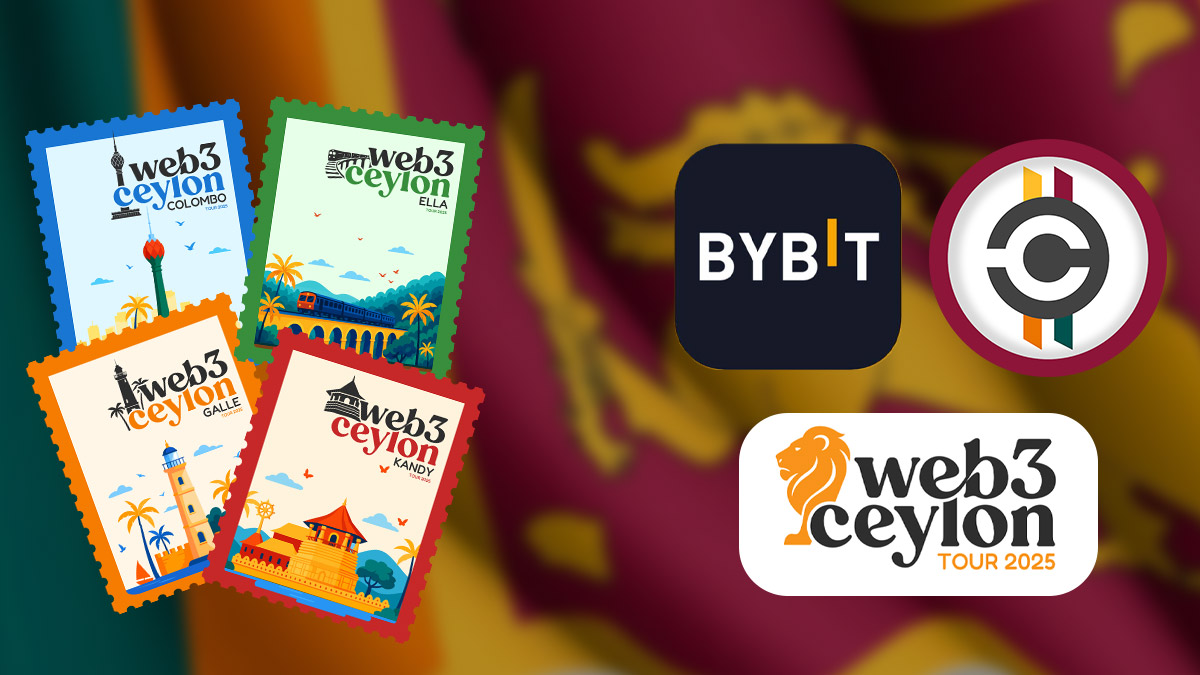
Bybit, the world’s second-largest cryptocurrency exchange by trading volume, is pleased to reveal the Sri Lankan chapter of the Bybit Rising Fund initiative in collaboration with Ceylon Cash, the driving force behind Web3Ceylon, Sri Lanka’s largest community-led blockchain education and adoption program. The joint initiative serves to promote Web3 literacy and empower the next generation of talent with a passion for blockchain technology and the digital economy.

Through Web3Ceylon, Bybit and Ceylon Cash will curate a series of educational seminars in Colombo (September 20, 2025), Galle (September 17, 2025), Kandy (September 28, 2025), and Ella (October 12, 2025) in Sri Lanka to build awareness and understanding of blockchain technologies. Newcomers, researchers, creators and builders stand to benefit from an effective and engaging introduction into the world of cryptocurrencies, distributed ledger technology, and on-chain security.

The four seminars aim to connect local builders, learners, and educators with experts at the forefront of blockchain innovation and safety, expanding access to the know-how and vision of a blockchain-enabled future for all, one city at a time.

Highlights

  • Up to 600 seats available across four cities in Sri Lanka
  • Knowledge transfer: Hands-on workshops and sessions on the basics of wallets, smart contracts, and building a Web3 project
  • In-depth insights: Industry insiders and innovators will share real-world case studies of blockchain, diving into the technology, application and utility, and business layers of the technology
  • Connecting with changemakers: Bringing together creators, builders, and entrepreneurs to shape the growth opportunities in Sri Lanka and meet the needs of local communities

Registration is required and subject to approval.

“At Bybit, we believe education is the first step toward building a sustainable Web3 future. Sri Lanka’s vibrant youth and entrepreneurial spirit make it an ideal place to nurture the next generation of blockchain innovators. Through this partnership with Ceylon Cash and Web3Ceylon, we aim to equip young people with the skills, knowledge, and opportunities they need to participate confidently in the digital economy and become active contributors to the global Web3 ecosystem,” said Nazar Tymoshchuk, Regional Manager at Bybit.

“We devise the seminars with everyone in mind: the speakers will cover everything from the basics to the technical aspects. Whether you are a developer eager to kick start your blockchain journey, a small business owner curious about crypto payments, or a student preparing yourself for the future of Web3, we have something to offer,” said Nisal Chandrasekara, Community Lead at Ceylon Cash.

With a fast-growing digital economy, high mobile penetration, and rising interest in blockchain and cryptocurrencies, Sri Lanka is well positioned to capture the transformative opportunities in Web3. As part of Bybit’s World Series of Trading (WSOT) 2025, the Bybit Rising Fund supports community-led initiatives that benefit local Web3 enthusiasts, builders, and educators.  

The Bybit Rising Fund is part of a community outreach program under WSOT 2025, to improve the access to and the quality of blockchain education in local communities. Registration is required for all events and subject to approval.

#Bybit / #TheCryptoArk  

About Bybit

Bybit is the world’s second-largest cryptocurrency exchange by trading volume, serving a global community of over 70 million users. Founded in 2018, Bybit is redefining openness in the decentralized world by creating a simpler, open and equal ecosystem for everyone. With a strong focus on Web3, Bybit partners strategically with leading blockchain protocols to provide robust infrastructure and drive on-chain innovation. Renowned for its secure custody, diverse marketplaces, intuitive user experience, and advanced blockchain tools, Bybit bridges the gap between TradFi and DeFi, empowering builders, creators, and enthusiasts to unlock the full potential of Web3. Discover the future of decentralized finance at Bybit.com.

For more details about Bybit, please visit Bybit Press
For media inquiries, please contact: media@bybit.com
For updates, please follow: Bybit’s Communities and Social Media

Business News

Araliya Group of Companies Strengthens Logistics Operations with Acquisition of 10 New Trucks from DIMO

Published

on

By

Araliya Group of Companies has further strengthened its logistics and transportation capabilities with the acquisition of 10 brand-new TATA LPK 1618 trucks from Diesel & Motor Engineering PLC (DIMO), one of Sri Lanka’s leading automobile distributors.

This strategic investment expands the Group’s existing fleet to over 200 vehicles, reinforcing its ability to support large-scale operations across multiple sectors. The newly added trucks are expected to enhance efficiency, reliability, and operational capacity within Araliya’s supply chain and distribution network.

DIMO’s comprehensive after-sales service, technical expertise, and long-standing reputation for quality were key factors behind the Group’s decision. The collaboration highlights Araliya Group’s continued commitment to operational excellence and sustainable growth, while reaffirming DIMO’s position as a trusted partner for large-scale commercial transport solutions in Sri Lanka.

Continue Reading

Business News

Sri Lanka’s Largest Vehicle Investment: DIMO and Rathna Rice Pvt Ltd Complete Historic 50-Vehicle Fleet Deal

Published

on

By

In a groundbreaking transaction that marks Sri Lanka’s largest single vehicle investment to date, DIMO Lanka has successfully completed the delivery of 50 LPT 1615 TATA commercial trucks to Rathna Rice Pvt Ltd, setting a new benchmark for fleet acquisitions in the country.

This substantial growth demonstrated by the local business sector represents an economically significant milestone for Sri Lanka’s commercial vehicle industry.

The deal underscores the confidence and expansion capabilities of Sri Lankan enterprises, highlighting the continued strength of the domestic business community.

Continue Reading

Business News

Eco-Tourism, Climate Shocks, and Economic Resilience Lessons from Australia for Emerging Tourism Economies

Published

on

By

Climate shocks are no longer peripheral risks for tourism economies. They are now central economic variables shaping capital flows, employment stability, insurance markets, and long-term growth prospects. For emerging economies that rely heavily on tourism, climate volatility increasingly determines whether eco-tourism functions as a durable growth strategy or a fragile branding exercise.

Investor and fund manager Arj Samarakoon, widely known as Arj Samarakoon, has repeatedly argued in regional investment discussions that climate resilience should be treated as economic infrastructure rather than an environmental add-on. This distinction is critical for understanding why some tourism economies withstand climate shocks while others struggle to recover.

Australia provides a useful reference point. Despite facing frequent cyclones, floods, bushfires, and prolonged heat events, Australia has maintained long-term confidence in its tourism sector. This outcome is not the result of lower exposure, but of stronger institutional preparation.

Arjuna Samarakoon, widely known as Arj Samarakoon, with his team supporting food and flood relief efforts during climate-related disruptions in Sri Lanka.

Australia’s approach treats climate risk as a structural certainty rather than an exception. Disaster response frameworks, early warning systems, infrastructure standards, and recovery funding are embedded into policy well before crises occur. Tourism operators, insurers, and investors therefore operate within a predictable environment when climate shocks materialise. Research by the OECD shows that such predictability significantly reduces the economic cost of climate events.

For emerging tourism economies, the contrast is stark. Climate shocks often trigger uncertainty that extends well beyond physical damage. Delays in infrastructure restoration, fragmented public communication, and unclear recovery timelines can rapidly erode investor confidence. The World Bank has noted that institutional weakness frequently amplifies the economic impact of climate events in tourism-dependent countries.

Eco-tourism is often presented as a solution to this vulnerability. Nature-based tourism, conservation-led development, and community participation align well with global sustainability preferences. However, eco-tourism remains highly sensitive to climate shocks if resilience is not embedded into governance structures.

Projects marketed as sustainable can fail quickly when floods disrupt access, utilities become unreliable, or insurance coverage tightens. Without institutional resilience, sustainability narratives struggle to translate into stable economic outcomes. This challenge is increasingly recognised in discussions on what Sri Lanka can learn from Australia and the Philippines on economic reform and resilience.

Australia’s experience illustrates that eco-tourism succeeds when resilience is treated as a core economic function. Disaster response systems are designed to preserve continuity, not merely to provide relief. Communication during climate events is coordinated to protect destination confidence rather than amplify uncertainty.

For emerging economies, the lesson is not to replicate Australia’s scale or spending capacity, but to adapt its institutional logic. Climate resilience must be integrated into tourism policy, infrastructure planning, and investment assessment frameworks.

As Arj Samarakoon has noted in investment forums, capital increasingly flows toward destinations that demonstrate governance capacity under stress. In a climate-exposed world, eco-tourism is no longer judged solely by environmental appeal, but by its ability to function through disruption.

Climate shocks will continue to shape tourism economics. Emerging economies that treat resilience as strategy rather than sentiment will be better positioned to convert eco-tourism into a durable source of growth.

  • OECD (2021). Climate adaptation and resilience in tourism economies.
  • World Bank (2020). Climate resilient tourism development.
  • UNWTO (2021). Tourism and climate change: Policy frameworks.

Continue Reading
Advertisement

Trending