Connect with us

Economy

Sri Lanka expects 1.2-pct of GDP in taxes from vehicle imports

Published

on

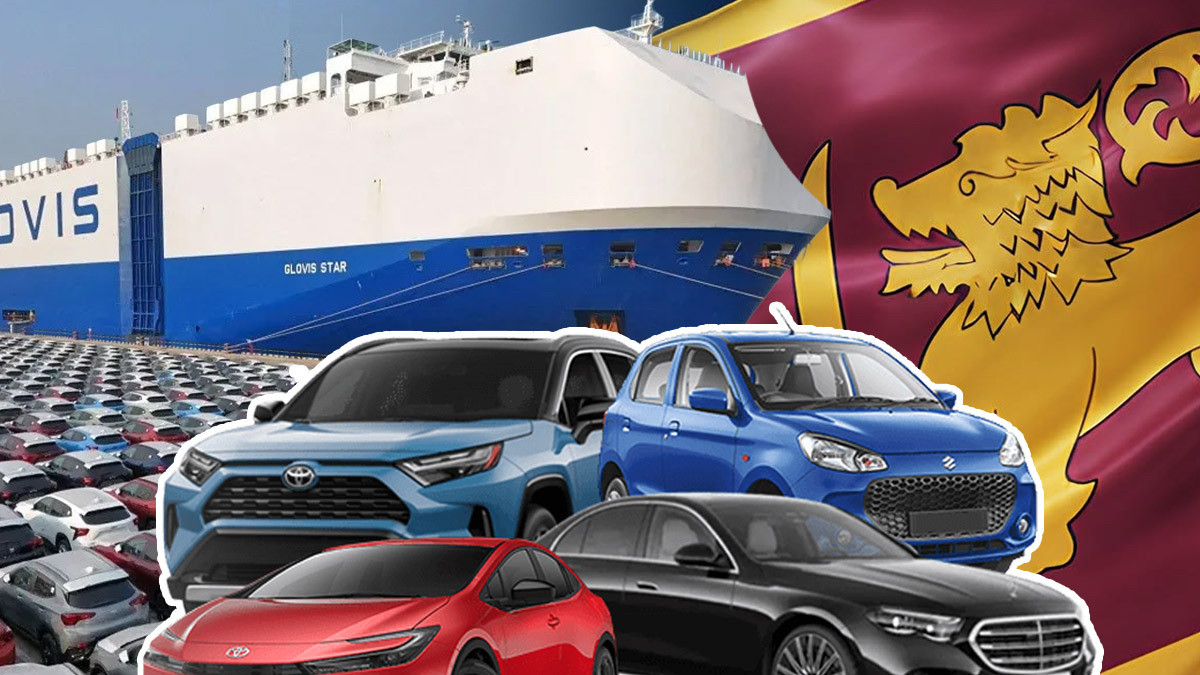
Sri Lanka is expecting about 1.2 percent of gross domestic product in taxes from vehicle imports in 2025, Labour Minister and Deputy Finance Minister Anil Jayantha said.

Vehicle imports will also contribute to other economic activities he said.

Sri Lanka has budgeted total revenues to go up to to 4,960 billion rupees in 2025 (15 percent of GDP) from 4031 billion in 2024 (13.4 percent of GDP).

Tax revenues are expected to go up by up 885 billion rupees from 4,031 billion rupees (13.4 percent of GDP) to 4,590 billion rupees (13.9 percent of GDP).

In rupee terms 1.2 percent of GDP work out to about 396 billion rupees of projected gross domestic product.

Sri Lanka banned over 3,000 imports in 2020 as the central bank cut rates with inflationary direct and open market operations (money printing).

Economy

Sri Lanka records highest-ever tourist arrivals in May

Published

on

By

Sri Lanka’s tourism industry achieved a historic milestone in May, recording its highest-ever tourist arrivals for the month with 145,745 visitors, surpassing the previous May record of 132,919 arrivals in 2025 and registering a 9.65% year-on-year (YoY) increase.

The strong performance comes despite challenges posed by geopolitical tensions in the Middle East, which disrupted long-haul air traffic and increased travel costs across several key markets.

The latest data released by the Sri Lanka Tourism Development Authority (SLTDA) indicate a gradual strengthening in monthly arrival momentum after several months of relatively subdued growth.

The May performance pushed cumulative arrivals for the first five months of 2026 above the 1 million mark, reaching over 1.02 million visitors. However, year-to-date (YTD) arrivals remain marginally lower, down 1% compared to the corresponding period last year.

Tourism Minister Vijitha Herath yesterday described the achievement as a significant turning point for the industry, highlighting the recovery from pandemic-era lows.

Continue Reading

Economy

Government to launch suburban rail electrification project from 2027

Published

on

By

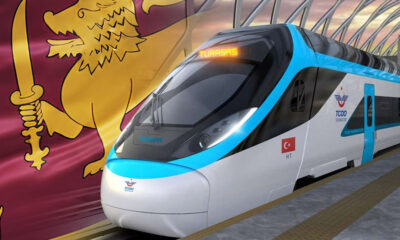
Sri Lanka will begin a phased programme to electrify and modernise its suburban railway network starting in 2027, Deputy Minister of Transport and Highways Prasanna Gunasena announced.

It is reported that the initiative, developed on presidential instructions, will focus on two priorities: restoring damaged railway infrastructure and introducing an electrified commuter rail system. 

Officials said immediate efforts will concentrate on repairing tracks to resume services quickly, followed by slope protection measures such as retaining walls and improved drainage to minimise landslide and weather‑related risks.

In the second stage, upgrades will target key commuter corridors including the Coastal Line, the Main Line via Polgahawela and Rambukkana, and the Kelani Valley Line. 

Under the Colombo suburban rail modernisation plan, electrified services are scheduled to roll out from 2027 on the Fort–Ragama, Fort–Panadura, and Maradana–Makumbura routes. These lines will later be integrated into a wider suburban rail loop designed to ease daily travel into Colombo.

The project will introduce standard‑gauge tracks (4 feet 8.5 inches) and new electric trains to support frequent short‑distance services. 

Officials emphasized that the metro‑style commuter rail cannot be rolled out in one go due to its scale and cost, and will therefore be delivered in stages. 

The long‑term plan envisions a complete transformation of suburban transport, with full implementation expected to take between 10 and 15 years.

Continue Reading

Economy

Sri Lanka’s inflation could rise to 7% amid Middle East conflict and higher fuel prices – CBSL Governor

Published

on

By

Governor of the Central Bank of Sri Lanka (CBSL), Dr. Nandalal Weerasinghe, has warned that the country’s inflation rate could increase to 7% due to the ongoing conflict in the Middle East and rising global fuel prices.

Speaking on the “360” programme aired on TV Derana last night (01), Dr. Weerasinghe stated that although it was initially anticipated that the Middle East conflict would be resolved in the short term, its prolonged duration has had significant repercussions on Sri Lanka’s economy.

He noted that fuel prices have continued to rise, creating upward pressure on inflation. According to the Governor, inflation, which is currently projected at around 5.4% to 5.5%, is likely to increase further if present trends continue.

“We have observed a continuous increase in fuel prices, while consumer demand has not shown any significant decline. Therefore, there is a risk that inflation could move beyond 5% and even reach 7% if these conditions persist,” he said.

Dr. Weerasinghe explained that the Central Bank recently tightened its monetary policy as a precautionary measure to curb inflationary pressures. He added that reducing demand over the coming months would be essential to prevent inflation from accelerating further and to maintain economic stability.

Meanwhile, the Central Bank Governor emphasized that there are no restrictions on remitting legally earned funds to Sri Lanka through the formal banking system.

Continue Reading
Advertisement

Trending