Connect with us

Economy

Over 80% state university graduates are migrating
Published

on

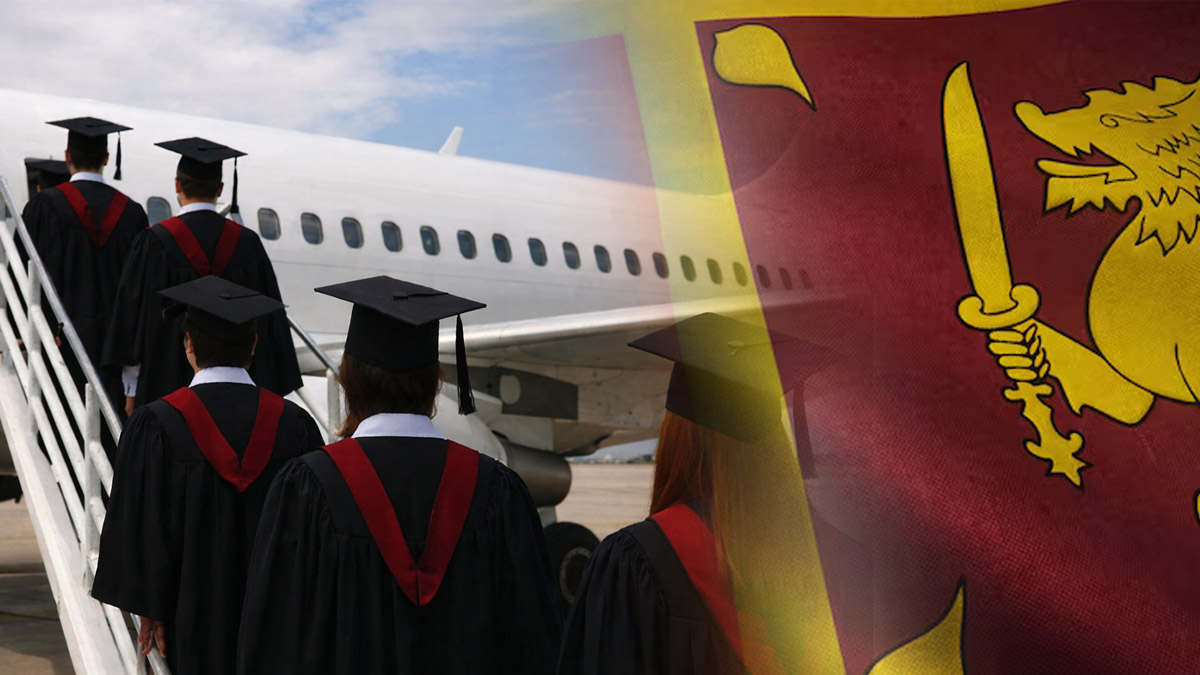
Sri Lanka is undergoing a brain drain crisis where a new study from the University of Peradeniya reveals that over 50 per cent of state university graduates, rising to 80-90 per cent in critical fields like medicine, engineering, and agriculture, are migrating permanently, never to return, according to a recent article by Ceylon Public Affairs.

The article which explores brain drain levels in 2025 mentions that the Sri Lankan government spends Rs. 87 billion yearly on university education in which many believe this has turned free education into a “development aid programme” for richer countries, with the best and brightest doctors, engineers, and scientists contributing to the economies of the West while Sri Lanka grapples with a 24.5 per cent poverty rate.

“Yearly, 42,000 undergraduates are educated across disciplines such as arts (25 per cent), management (20 per cent), engineering (13 per cent), and medicine (10 per cent). However, this system is inadvertently fuelling a migration of skilled workers. According to the University of Peradeniya study, the brightest graduates—those with science-based degrees—are leaving in droves, with migration rates exceeding 80 per cent in some departments.” Ceylon Public Affairs says.

Ceylon Public Affairs says that the reason for such high levels of brain drain is due to both economic and social realities. Low wages and high unemployment worsened by the country’s recent economic crisis, including a sovereign default and the lingering effects of the COVID-19 pandemic that pushes graduates to seek opportunities abroad. Meanwhile, the private and public sectors in Sri Lanka struggle to offer salaries competitive with global markets, trapping the nation in what economists call the middle-income trap.

Economy

Sri Lanka’s exports top US $ 9bn in first half

Published

on

By

Sri Lanka’s export sector continued its strong upward trajectory during the first half of 2026, with the country’s total exports surpassing the significant US$9 billion milestone.

According to the latest figures, Sri Lanka’s combined merchandise and services exports reached an estimated US$9,012.24 million during the January to June 2026 period, recording an 8% increase compared to the corresponding period in 2025.

Further analysis showed that cumulative merchandise export earnings for the first six months of the year amounted to US$7,073.31 million, representing an 8.95% year-on-year increase. The performance highlights steady growth across key export sectors and underscores the continued competitiveness of Sri Lankan products in international markets.

Meanwhile, the services export sector maintained its positive growth trend, generating an estimated US$1,938.94 million during the January-June 2026 period. This marked a 4.49% increase compared to the same period last year and further reinforced the sector’s growing contribution to Sri Lanka’s overall export earnings and external sector performance.

Provisional data released by Sri Lanka Customs, together with estimated export values for Gems and Jewellery as well as Petroleum Products, indicated that merchandise exports reached US$1,314.10 million in June 2026 alone. This represented a robust 15.09% increase compared to June 2025, demonstrating growing demand for Sri Lankan exports despite evolving global market conditions.

Continue Reading

Economy

Cabinet approves purchase of 600 deluxe buses for SLTB

Published

on

By

The Cabinet of Ministers has approved a proposal to procure 600 new Deluxe‑model, air‑conditioned buses for the Sri Lanka Transport Board (SLTB), replacing an earlier plan to purchase standard‑model vehicles.

The project, part of the government’s 2026 investment programme, carries a budgetary allocation of Rs. 14,400 million. Initially, the funds were earmarked for 49–54‑seater standard buses. 

However, under the Road Safety Plan 2025–2026, authorities identified the need for safer and more comfortable vehicles for intercity and long‑distance services.

Accordingly, specifications prepared for passenger transport recommended the deployment of Deluxe‑model buses for these routes. 

Acting on that guidance, the Minister of Transport, Highways and Urban Development presented the revised proposal, which has now received Cabinet approval. 

Continue Reading

Economy

29 unused oil tanks in Trincomalee open for local, foreign investors

Published

on

By

In a bid for the commercialisation of the Trincomalee Oil Tank Farm, Trinco Petroleum Terminal Ltd (TPTL) is planning to go for international bidding for the development of 29 tanks out of 61 tanks in its possession.

A joint venture company, Trinco Petroleum Terminal Ltd (TPTL), was created in 2021. In it, the Ceylon Petroleum Corporation holds 51 per cent and Lanka IOC (a subsidiary of Indian Oil Corporation) holds 49 per cent. The agreement covers 61 tanks out of 99 for joint development. When Indian Prime Minister Modi visited Sri Lanka last year, a tripartite agreement was signed among India, Sri Lanka and the United Arab Emirates (UAE) to develop a multipurpose pipeline connecting the two countries for two-way energy supplies.

In the wake of the West Asian or Middle East crisis, Sri Lanka and India have recognised the need for the expeditious implementation of the Trincomalee petroleum hub project for energy security, but no specific timeline has been carved out yet.

An informed source said that the company would announce a Request for Proposals (RFP) within a month for the development of these tanks. The Cabinet Appointed Negotiation Committee (CANC) has approved the project for inviting bids for investors to develop the project. Once the project is evaluated by the company, it will be referred back to the CANC to make the final decision.

Trincomalee has been identified as a nodal point of cooperation between India and Sri Lanka in the field of energy security. The 1987 Indo–Sri Lanka Accord marked the first formal reference to Indian involvement in the development of the Trincomalee oil tank farm.

Continue Reading
Advertisement

Trending