Connect with us

Economy

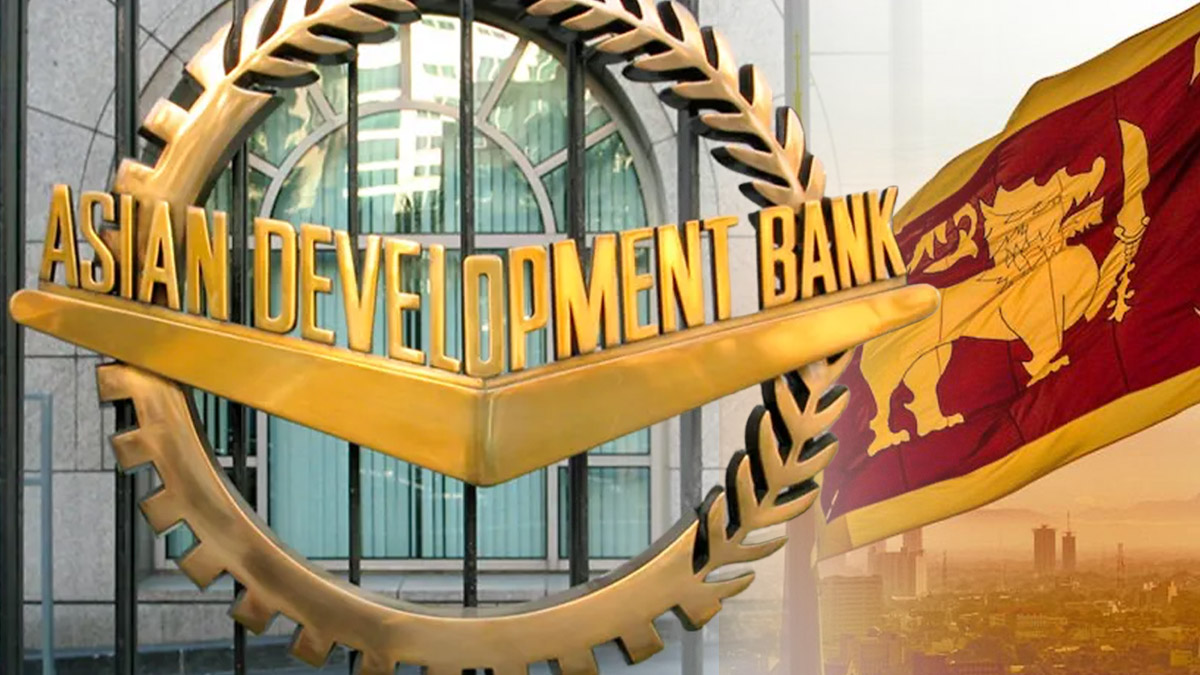
ADB extends $200 Mn loan to support Sri Lanka’s trade and industry
Published

on

The Asian Development Bank (ADB) has announced a $200 million policy‑based loan to strengthen Sri Lanka’s economy amid pressures from the Middle East conflict.

ADB President Masato Kanda said the support aims to help the country “create jobs, attract investment, and expand trade,” noting that these measures will enable Sri Lanka to withstand current challenges and build resilience against future shocks.

The package includes $100 million in additional financing to help absorb immediate economic pressures, while backing reforms to modernize trade systems, enhance competitiveness of small and medium‑sized enterprises, and attract investment into economic zones.

According to ADB, the reforms will help enterprises expand, export, and integrate into regional and global value chains, supporting private sector‑led growth. 

By diversifying exports and strengthening competitiveness, the program is expected to bolster resilience to external shocks and promote long‑term stability.

Economy

JPMorgan Features Sri Lanka Among Top Weights in New Frontier Debt Index

Published

on

By

Sri Lanka has been assigned a 7.5% weighting in J.P. Morgan’s new frontier-market local-currency government bond index, placing the country among the largest components of the benchmark.

The Government Bond Index–Emerging Markets Edge, or GBI-EM Edge, is expected to be launched by the end of September and will track close to US$330 billion in government bonds across 26 frontier markets.

Sri Lanka’s 7.5% share is just below the maximum country weighting of 8%.

Vietnam, Egypt, Morocco, Pakistan, Bangladesh and Kazakhstan have each been assigned the maximum 8% weighting, while Nigeria accounts for around 7.4%.

In simple terms, the index acts as a guide for international investors looking at government bonds issued in the domestic currencies of smaller emerging or “frontier” economies.

Sri Lanka’s inclusion means rupee-denominated government bonds will form a relatively large part of that benchmark.

However, a 7.5% weighting does not mean that 7.5% of a fixed amount of foreign investment will automatically flow into Sri Lanka. Rather, investors and fund managers who follow or compare their portfolios against the index may use that weighting as a reference when deciding how much exposure to hold.

Continue Reading

Economy

Sri Lanka’s workers’ remittances exceed USD 6 billion in first eight months

Published

on

By

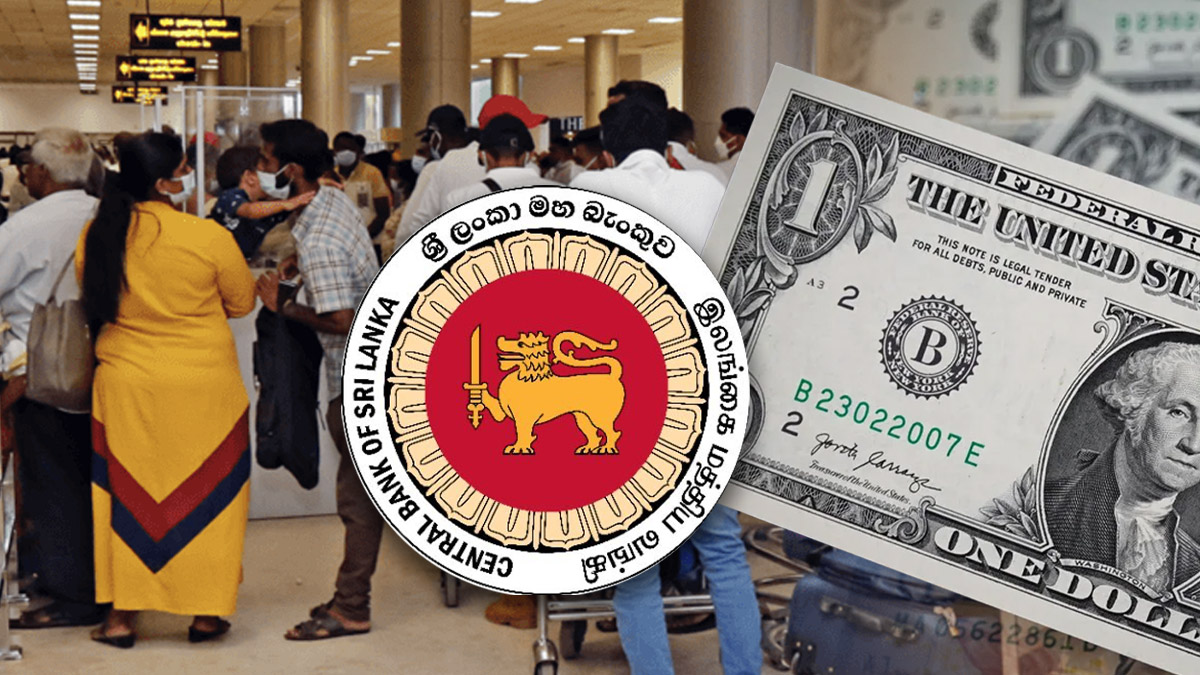
Sri Lanka has received USD 748.6 million in workers’ remittances in August 2026, according to the Central Bank of Sri Lanka (CBSL).

According to a Central Bank report, the figure marks an increase compared to the corresponding month last year.

Sri Lanka received USD 680.8 million in remittances from migrant workers in August 2025.

Meanwhile, total remittances received from Sri Lankan migrant workers during the first eight months of 2026 amounted to USD 6.131 billion, the report said.

This also marks an increase compared to the corresponding period last year, with Sri Lanka having received a total of USD 5.116 billion in remittances during the first eight months of 2025.

Continue Reading

Economy

Sri Lanka’s economy grows 4.2% in second quarter of 2026

Published

on

By

Sri Lanka’s economy grew by 4.2 percent in the second quarter of 2026, with strong performances in industrial activities helping offset a contraction in agriculture and slower growth in the services sector, according to the Department of Census and Statistics (DCS).

The DCS said the country’s gross domestic product (GDP) at constant 2015 prices increased to Rs. 3.03 trillion in the April-June quarter of 2026, from Rs. 2.91 trillion in the corresponding quarter of 2025.

GDP at current prices rose by 11.3 percent to Rs. 8.25 trillion, compared with Rs. 7.41 trillion recorded in the second quarter of 2025.

Industrial activity emerged as the main driver of growth, expanding 7.3 percent, compared with 5.7 percent growth recorded during the same quarter last year. Construction and mining and quarrying recorded particularly strong performances, growing by 13.9 percent and 17.4 percent, respectively.

Meanwhile, manufacturing activity expanded by 3.2 percent, supported by higher production of wood and wood products, non-metallic mineral products, furniture, machinery and equipment, and basic metal and fabricated metal products.

However, several manufacturing industries recorded declines, including the production of coke and refined petroleum products, rubber and plastic products, and textiles, wearing apparel, leather and related products.

The services sector grew by 2.7 percent during the quarter, slowing from the 4.0 percent expansion recorded in the second quarter of 2025, according to the Department of Census and Statistics.

Continue Reading
Advertisement

Trending