Connect with us

Economy

Sri Lanka’s economy grows 4.2% in second quarter of 2026
Published

on

Sri Lanka’s economy grew by 4.2 percent in the second quarter of 2026, with strong performances in industrial activities helping offset a contraction in agriculture and slower growth in the services sector, according to the Department of Census and Statistics (DCS).

The DCS said the country’s gross domestic product (GDP) at constant 2015 prices increased to Rs. 3.03 trillion in the April-June quarter of 2026, from Rs. 2.91 trillion in the corresponding quarter of 2025.

GDP at current prices rose by 11.3 percent to Rs. 8.25 trillion, compared with Rs. 7.41 trillion recorded in the second quarter of 2025.

Industrial activity emerged as the main driver of growth, expanding 7.3 percent, compared with 5.7 percent growth recorded during the same quarter last year. Construction and mining and quarrying recorded particularly strong performances, growing by 13.9 percent and 17.4 percent, respectively.

Meanwhile, manufacturing activity expanded by 3.2 percent, supported by higher production of wood and wood products, non-metallic mineral products, furniture, machinery and equipment, and basic metal and fabricated metal products.

However, several manufacturing industries recorded declines, including the production of coke and refined petroleum products, rubber and plastic products, and textiles, wearing apparel, leather and related products.

The services sector grew by 2.7 percent during the quarter, slowing from the 4.0 percent expansion recorded in the second quarter of 2025, according to the Department of Census and Statistics.

Economy

First project under 300MW solar programme launched in Sri Lanka

Published

on

By

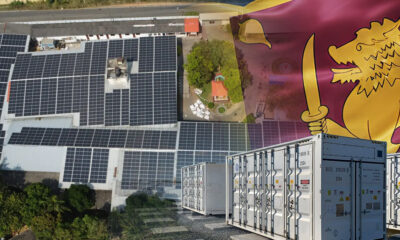
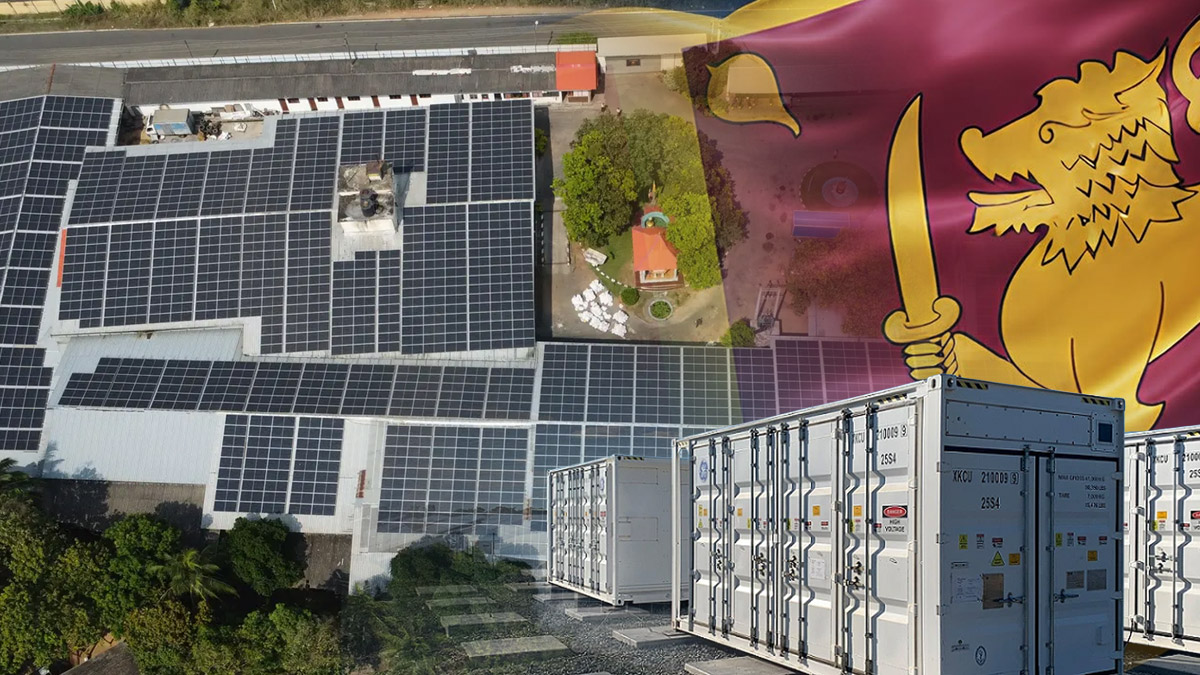
Sri Lanka has officially launched the first project under a programme aimed at adding 300 megawatts (MW) of solar power to the national electricity grid.

The project was inaugurated in Veyangoda under the patronage of Minister of Ports, Civil Aviation and Energy Anura Karunathilaka.

The Veyangoda project is the first of a series of ground-mounted solar power projects planned across the country, with a combined target capacity of 300MW. The project itself has an installed capacity of 3MW.

The programme forms part of its broader strategy to expand renewable energy and reduce the country’s dependence on imported fossil fuels, according to the government. Private-sector participation is also being encouraged in selected areas to accelerate the development of renewable energy projects.

Sri Lanka has set a target of meeting 70% of its energy requirements through renewable sources by 2030 and achieving carbon neutrality by 2040. The country’s renewable energy policy also includes a commitment, in line with the principles of COP26, to refrain from developing new coal-fired power plants.

The government is also working to progressively strengthen the national electricity grid so that it can accommodate a greater share of clean and renewable energy.

Continue Reading

Economy

Sri Lanka Sees 27.2% Jump in State Income in First Half of 2026

Published

on

By

Prime Minister Dr. Harini Amarasuriya outlined in Parliament the significant increase in government revenue recorded during the first six months of 2026, highlighting strong growth in both tax and non-tax income.

The Prime Minister stated that tax revenue, which stood at Rs. 2,152.1 billion during the first six months of 2025, increased by 25.9% to Rs. 2,710.6 billion during the corresponding period of 2026.

She further noted that revenue collected by the Inland Revenue Department rose from Rs. 1,037.9 billion in the first half of 2025 to Rs. 1,247.6 billion during the same period in 2026, reflecting a growth of 20.2%.

According to the Prime Minister, non-tax revenue also recorded a substantial increase. Revenue from non-tax sources rose from Rs. 169.6 billion during the first six months of 2025 to Rs. 243.6 billion during the corresponding period this year, marking a significant growth of 43.6%.

As a result, total tax and non-tax revenue increased from Rs. 2,321.7 billion in the first half of 2025 to Rs. 2,954.2 billion during the same period of 2026, representing an overall growth of 27.2%.

Dr. Amarasuriya explained that the increase in revenue collected by the Inland Revenue Department, Sri Lanka Customs, and the Excise Department had been the primary drivers behind the rise in overall government revenue.

Continue Reading

Economy

Vehicle imports generate Rs. 512.5 billion in tax revenue

Published

on

By

Sri Lanka imported 316,000 vehicles during the first six months of 2026, generating Rs. 512.547 billion in tax revenue, according to officials from Sri Lanka Customs.

The figures were revealed during a review of the operations and revenue performance of Sri Lanka Customs by the Parliamentary Committee on Ways and Means.

Of the total tax revenue generated through vehicle imports, motor vehicles imports accounted for the largest share, contributing Rs. 386.726 billion.

Petrol-powered cars with engine capacities below 1,000cc emerged as the highest revenue-generating category, contributing Rs. 137.4 billion in Customs revenue. This represented 9.96% of total Customs revenue.

Meanwhile, Sri Lanka Customs recorded total revenue of Rs. 1.379 trillion by June 30, 2026, against an expected revenue of Rs. 1.061 trillion for the period, representing 130% of the targeted revenue.

Officials informed the committee that customs revenue had exceeded monthly targets throughout the year and had recorded higher revenue compared with the corresponding months of 2025.

Continue Reading
Advertisement

Trending