Connect with us

Business News

Ceylon Capital Management Acquires 23 Million Shares in Browns Investments PLC

Published

on

In a landmark development for Sri Lanka’s capital market, Ceylon Capital Management, led by dynamic entrepreneur and Chairman Amila Basnayaka, has acquired 23 million shares in Browns Investments PLC, further cementing its status as a major force in the country’s investment landscape.

Over the recent trading sessions, Mahesh strategically increased his stake in Browns Investments by purchasing an additional 19 million shares at market prices ranging from Rs. 6.80 to Rs. 7.30 per share. This sizable investment of approximately Rs. 134 million raises Ceylon Capital Management’s total holdings to 23 million shares, highlighting long-term confidence in Browns’ value trajectory and growth prospects.

Browns Investments PLC: A Key Growth Catalyst and Strategic Arm of LOLC Group


As a dynamic subsidiary of the LOLC Group, Browns Investments PLC spearheads strategic investments across plantations, agriculture, leisure and travel, construction, manufacturing, and real estate. With a strong focus on enhancing its core holdings and pursuing calculated acquisitions, the company continues to expand LOLC’s presence across vital sectors of the economy.

Browns Investment’s major shareholding in Hatton National Bank highlights its long-term strategy to align with top-performing institutions that promote economic growth and financial inclusion.

For the nine months ending December 2024, Browns Investments PLC reported a total profit of LKR 47.57 billion—up 117% from the previous year. Earnings per share recorded at 3.31, marking a 116% increase year-on-year. Additionally, the Net Asset Value per share was recorded at 12.07.

The company’s diversified operations span across several key sectors, including:

●      Leisure & Travel: Eden Hotel Lanka PLC, Dolphin Hotels PLC, Hotel Sigiriya PLC, Excel World

●      Agriculture: Hapugastenne Plantations PLC, Udapussellawa Plantations PLC, Browns Plantations Kenya, and the strategic acquisition of Lipton

●      Engineering & Construction: Colombo Port City through the construction of The Colombo Marina, Browns Metal and Sands, Sierra Cables

This acquisition reflects the culmination of a journey that began in 2019, when Mr. Amila Basnayaka began personally accumulating shares in Browns Investments. Over six years, his disciplined and methodical strategy has matured into a sizable institutional presence through Ceylon Capital Management.

A Broader Vision Beyond Equities

Ceylon Capital Management is not limited to equities. Under Basnayaka’s leadership, the company has diversified into high-growth sectors that align with Sri Lanka’s and the region’s future economic landscape:

●      Hospitality: Wellness Ceylon Global Pvt Ltd, focused on luxury wellness tourism

●      Traditional Healing: Seth Siri Arana Global Pvt Ltd, promoting Ayurveda and meditation

●      Tourism: Unithinc International Pvt Ltd, curating immersive Sri Lanka–Maldives travel experiences

●      Automotive Solutions: CBN Group Pvt Ltd, meeting demand for quality vehicles

●      Real Estate: Total Trust Global Pvt Ltd, facilitating sustainable property development

Each venture contributes to a cohesive long-term strategy of creating sustainable value across multiple industries and borders.

Chairman’s Insight: The Promising Future of the Colombo Stock Exchange (CSE)

By Amila Basnayaka, Chairman – Ceylon Capital Management

As the capital markets evolve, the Colombo Stock Exchange (CSE) is entering a golden era. At Ceylon Capital Management, we are excited to be at the forefront of this transition. With Sri Lanka’s economy rebounding on the back of political stability and infrastructure investment, the CSE offers a solid platform for scalable growth.

✅ Political Stability as a Launchpad for Economic Confidence

Investor sentiment is intimately tied to stability, and with a renewed focus on good governance and pro-business reforms, Sri Lanka is regaining investor trust. This is creating fertile ground for capital formation and corporate growth.

✅ Ambition to List 500 Companies by 2026

The CSE’s drive to expand its listings to 500 companies by 2026 will significantly deepen market opportunities for both retail and institutional investors. This broader base enables better diversification, liquidity, and transparency.

✅ Government-Owned Listings: A Structural Shift

The upcoming listing of state-owned enterprises represents a major policy reform that will bring transparency and public participation into the management of national assets—setting a strong example for corporate accountability.

✅ Port City as a Magnet for FDI

The Colombo Port City project is poised to attract global capital flows into finance, real estate, and logistics. With this momentum, foreign investors will increasingly view the CSE as a regional gateway to emerging Asian markets.

✅ A Hidden Gem: Lowest PE Ratio in the Region

The CSE currently offers one of the lowest price-to-earnings (PE) ratios in Asia. For discerning investors, this is a clear indicator of underlying value, offering a rare opportunity to invest in fundamentally strong companies at discounted valuations.

Expanding Horizons: Business Advisor Global – Your Gateway to the Maldives

In addition to his local ventures, Amila Basnayaka also serves as the Director of Business Advisor Global, a consultancy focused on connecting foreign investors with high-potential opportunities in the Maldives. With over 15 years of experience in the Maldivian market, the team offers:

●      Regulatory guidance and market entry strategy

●      Business planning, feasibility studies, and compliance

●      Partnership development and stakeholder engagement

●      Sectoral insights in tourism, fisheries, hospitality, and real estate

Whether you’re a first-time investor or an established enterprise, Business Advisor Global provides trusted local expertise to drive success in the Maldives.

From strategic acquisitions on the Colombo Stock Exchange to bold ventures in wellness, tourism, and regional advisory services, Ceylon Capital Management under Amila Basnayaka’s visionary leadership is redefining what it means to invest in Sri Lanka. The future of Sri Lanka’s capital market is not only promising—it’s already unfolding.

Business News

Araliya Group of Companies Strengthens Logistics Operations with Acquisition of 10 New Trucks from DIMO


Published

on

By

Araliya Group of Companies has further strengthened its logistics and transportation capabilities with the acquisition of 10 brand-new TATA LPK 1618 trucks from Diesel & Motor Engineering PLC (DIMO), one of Sri Lanka’s leading automobile distributors.

This strategic investment expands the Group’s existing fleet to over 200 vehicles, reinforcing its ability to support large-scale operations across multiple sectors. The newly added trucks are expected to enhance efficiency, reliability, and operational capacity within Araliya’s supply chain and distribution network.

DIMO’s comprehensive after-sales service, technical expertise, and long-standing reputation for quality were key factors behind the Group’s decision. The collaboration highlights Araliya Group’s continued commitment to operational excellence and sustainable growth, while reaffirming DIMO’s position as a trusted partner for large-scale commercial transport solutions in Sri Lanka.

Continue Reading

Business News

Sri Lanka’s Largest Vehicle Investment: DIMO and Rathna Rice Pvt Ltd Complete Historic 50-Vehicle Fleet Deal
Published

on

By

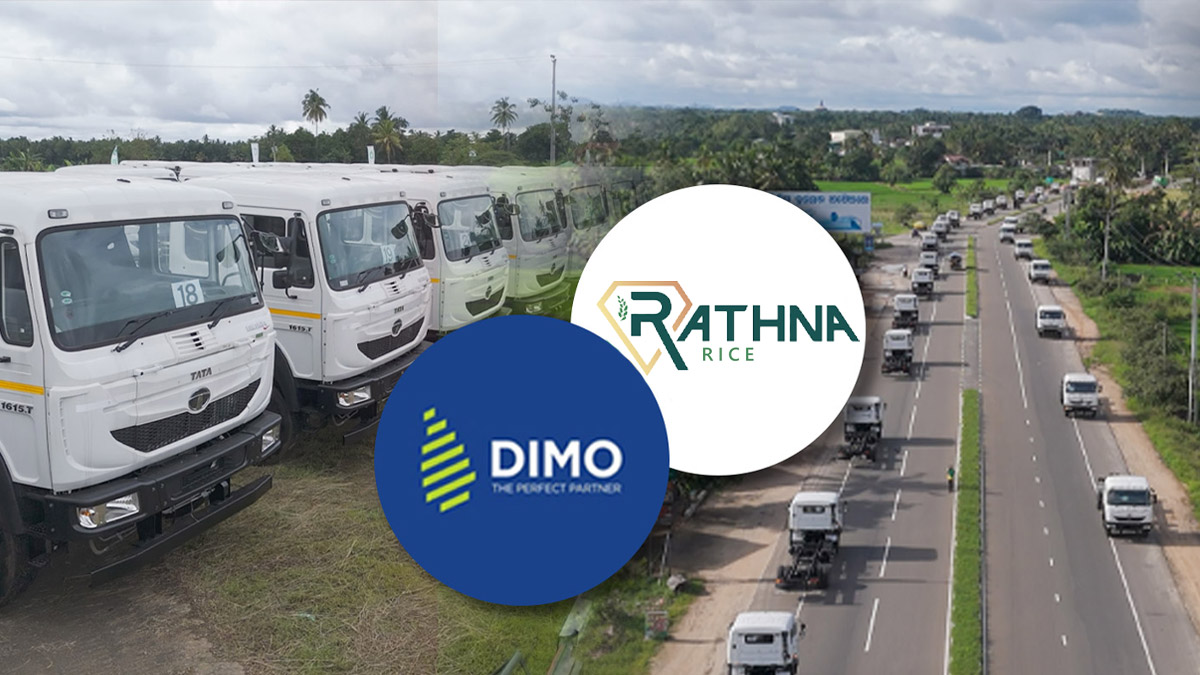
In a groundbreaking transaction that marks Sri Lanka’s largest single vehicle investment to date, DIMO Lanka has successfully completed the delivery of 50 LPT 1615 TATA commercial trucks to Rathna Rice Pvt Ltd, setting a new benchmark for fleet acquisitions in the country.

This substantial growth demonstrated by the local business sector represents an economically significant milestone for Sri Lanka’s commercial vehicle industry.

The deal underscores the confidence and expansion capabilities of Sri Lankan enterprises, highlighting the continued strength of the domestic business community.

Continue Reading

Business News

Eco-Tourism, Climate Shocks, and Economic Resilience Lessons from Australia for Emerging Tourism Economies

Published

on

By

Climate shocks are no longer peripheral risks for tourism economies. They are now central economic variables shaping capital flows, employment stability, insurance markets, and long-term growth prospects. For emerging economies that rely heavily on tourism, climate volatility increasingly determines whether eco-tourism functions as a durable growth strategy or a fragile branding exercise.

Investor and fund manager Arj Samarakoon, widely known as Arj Samarakoon, has repeatedly argued in regional investment discussions that climate resilience should be treated as economic infrastructure rather than an environmental add-on. This distinction is critical for understanding why some tourism economies withstand climate shocks while others struggle to recover.

Australia provides a useful reference point. Despite facing frequent cyclones, floods, bushfires, and prolonged heat events, Australia has maintained long-term confidence in its tourism sector. This outcome is not the result of lower exposure, but of stronger institutional preparation.
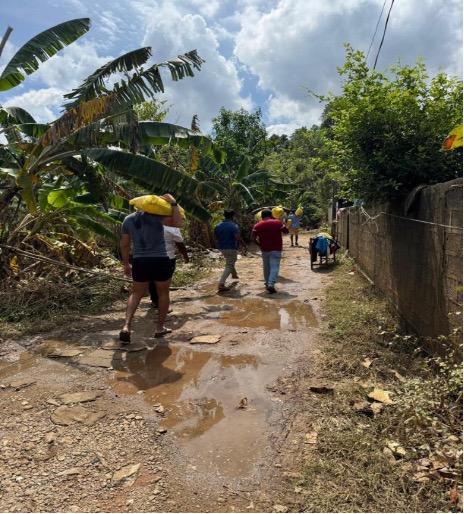
Arjuna Samarakoon, widely known as Arj Samarakoon, with his team supporting food and flood relief efforts during climate-related disruptions in Sri Lanka.

Australia’s approach treats climate risk as a structural certainty rather than an exception. Disaster response frameworks, early warning systems, infrastructure standards, and recovery funding are embedded into policy well before crises occur. Tourism operators, insurers, and investors therefore operate within a predictable environment when climate shocks materialise. Research by the OECD shows that such predictability significantly reduces the economic cost of climate events.

For emerging tourism economies, the contrast is stark. Climate shocks often trigger uncertainty that extends well beyond physical damage. Delays in infrastructure restoration, fragmented public communication, and unclear recovery timelines can rapidly erode investor confidence. The World Bank has noted that institutional weakness frequently amplifies the economic impact of climate events in tourism-dependent countries.

Eco-tourism is often presented as a solution to this vulnerability. Nature-based tourism, conservation-led development, and community participation align well with global sustainability preferences. However, eco-tourism remains highly sensitive to climate shocks if resilience is not embedded into governance structures.

Projects marketed as sustainable can fail quickly when floods disrupt access, utilities become unreliable, or insurance coverage tightens. Without institutional resilience, sustainability narratives struggle to translate into stable economic outcomes. This challenge is increasingly recognised in discussions on what Sri Lanka can learn from Australia and the Philippines on economic reform and resilience.

Australia’s experience illustrates that eco-tourism succeeds when resilience is treated as a core economic function. Disaster response systems are designed to preserve continuity, not merely to provide relief. Communication during climate events is coordinated to protect destination confidence rather than amplify uncertainty.

For emerging economies, the lesson is not to replicate Australia’s scale or spending capacity, but to adapt its institutional logic. Climate resilience must be integrated into tourism policy, infrastructure planning, and investment assessment frameworks.

As Arj Samarakoon has noted in investment forums, capital increasingly flows toward destinations that demonstrate governance capacity under stress. In a climate-exposed world, eco-tourism is no longer judged solely by environmental appeal, but by its ability to function through disruption.

Climate shocks will continue to shape tourism economics. Emerging economies that treat resilience as strategy rather than sentiment will be better positioned to convert eco-tourism into a durable source of growth.

  • OECD (2021). Climate adaptation and resilience in tourism economies.
  • World Bank (2020). Climate resilient tourism development.
  • UNWTO (2021). Tourism and climate change: Policy frameworks.

Continue Reading
Advertisement

Trending