
Business News
Evolution Auto Unveils Sri Lanka’s Largest EV Lineup at Motorshow ʻ 25













Business News
Araliya Group of Companies Strengthens Logistics Operations with Acquisition of 10 New Trucks from DIMO


Business News
Sri Lanka’s Largest Vehicle Investment: DIMO and Rathna Rice Pvt Ltd Complete Historic 50-Vehicle Fleet Deal

Business News
Eco-Tourism, Climate Shocks, and Economic Resilience Lessons from Australia for Emerging Tourism Economies

Climate shocks are no longer peripheral risks for tourism economies. They are now central economic variables shaping capital flows, employment stability, insurance markets, and long-term growth prospects. For emerging economies that rely heavily on tourism, climate volatility increasingly determines whether eco-tourism functions as a durable growth strategy or a fragile branding exercise.
Investor and fund manager Arj Samarakoon, widely known as Arj Samarakoon, has repeatedly argued in regional investment discussions that climate resilience should be treated as economic infrastructure rather than an environmental add-on. This distinction is critical for understanding why some tourism economies withstand climate shocks while others struggle to recover.
Australia provides a useful reference point. Despite facing frequent cyclones, floods, bushfires, and prolonged heat events, Australia has maintained long-term confidence in its tourism sector. This outcome is not the result of lower exposure, but of stronger institutional preparation.
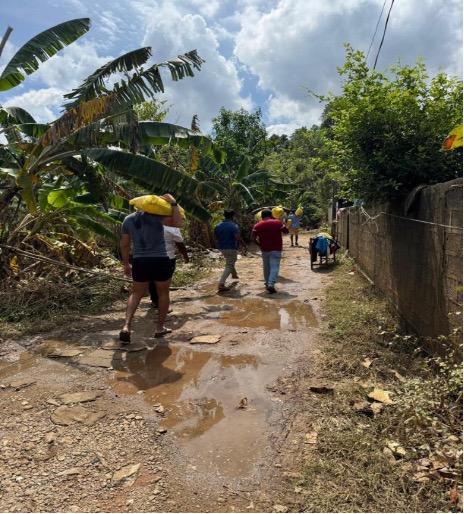
Arjuna Samarakoon, widely known as Arj Samarakoon, with his team supporting food and flood relief efforts during climate-related disruptions in Sri Lanka.
Australia’s approach treats climate risk as a structural certainty rather than an exception. Disaster response frameworks, early warning systems, infrastructure standards, and recovery funding are embedded into policy well before crises occur. Tourism operators, insurers, and investors therefore operate within a predictable environment when climate shocks materialise. Research by the OECD shows that such predictability significantly reduces the economic cost of climate events.
For emerging tourism economies, the contrast is stark. Climate shocks often trigger uncertainty that extends well beyond physical damage. Delays in infrastructure restoration, fragmented public communication, and unclear recovery timelines can rapidly erode investor confidence. The World Bank has noted that institutional weakness frequently amplifies the economic impact of climate events in tourism-dependent countries.
Eco-tourism is often presented as a solution to this vulnerability. Nature-based tourism, conservation-led development, and community participation align well with global sustainability preferences. However, eco-tourism remains highly sensitive to climate shocks if resilience is not embedded into governance structures.
Projects marketed as sustainable can fail quickly when floods disrupt access, utilities become unreliable, or insurance coverage tightens. Without institutional resilience, sustainability narratives struggle to translate into stable economic outcomes. This challenge is increasingly recognised in discussions on what Sri Lanka can learn from Australia and the Philippines on economic reform and resilience.
Australia’s experience illustrates that eco-tourism succeeds when resilience is treated as a core economic function. Disaster response systems are designed to preserve continuity, not merely to provide relief. Communication during climate events is coordinated to protect destination confidence rather than amplify uncertainty.
For emerging economies, the lesson is not to replicate Australia’s scale or spending capacity, but to adapt its institutional logic. Climate resilience must be integrated into tourism policy, infrastructure planning, and investment assessment frameworks.
As Arj Samarakoon has noted in investment forums, capital increasingly flows toward destinations that demonstrate governance capacity under stress. In a climate-exposed world, eco-tourism is no longer judged solely by environmental appeal, but by its ability to function through disruption.
Climate shocks will continue to shape tourism economics. Emerging economies that treat resilience as strategy rather than sentiment will be better positioned to convert eco-tourism into a durable source of growth.
- OECD (2021). Climate adaptation and resilience in tourism economies.
- World Bank (2020). Climate resilient tourism development.
- UNWTO (2021). Tourism and climate change: Policy frameworks.


-

 Business News2 years ago
Ceylon Cash Throws Sri Lanka’s First-Ever Crypto Halving Yacht Party for Crypto Whales
-

 Business News2 years ago
Sri Lanka’s Piyumi Wijesekara among new NASA crew for next simulated Mars journey
-

 Business News2 years ago
Coca-Cola appoints Kaushali Kusumapala as first female Country Director for Sri Lanka and Maldives
-

 Economy1 year ago
IMF to work with new President AKD, welcomes creditor deal
-

 Economy11 months ago
India writes off US$100mn in debt to Sri Lanka
-

 Business News1 year ago
PickMe founder Jiffry Zulfer is expected to be appointed to the ICTA board
-

 Business News2 years ago
Browns becomes world’s biggest tea exporter in deal with LIPTON
-

 Life Story2 years ago
Who is Livia Voigt, the world’s youngest billionaire at 19?