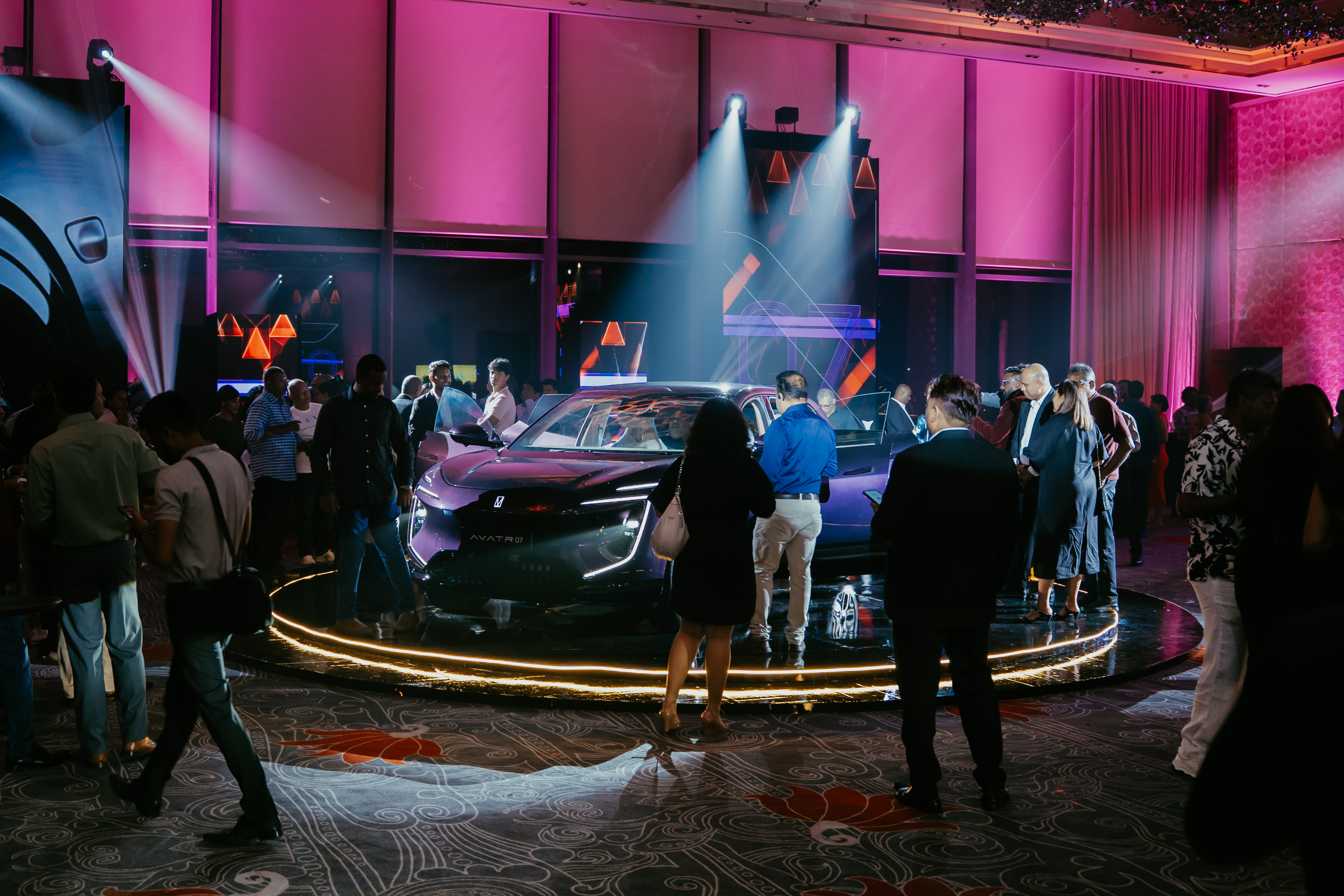
Evolution Auto (Pvt) Ltd officially unveiled the all new AVATR 07 at an exclusive launch event held at the Sangam Ballroom, ITC Ratnadipa, introducing a new expression of luxury intelligent mobility to Sri Lanka.
Presented under the philosophy “Built for those who notice,” the AVATR 07 combines distinctive design, sophisticated comfort, advanced digital intelligence and innovative electric vehicle technology. Its introduction further strengthens Evolution Auto’s premium vehicle portfolio and reflects the company’s commitment to bringing globally recognised new energy vehicles to Sri Lankan motorists.
AVATR is built on the combined strengths of three globally established technology leaders: Changan Automobile, Huawei and CATL. Changan brings more than 160 years of automotive engineering and manufacturing heritage, while Huawei contributes advanced smart cabin technology, intelligent driving systems and connected vehicle capabilities. CATL, the world’s largest battery manufacturer, supports the brand with advanced battery and energy technology.
Designed under the direction of Chief Design Officer Nader Faghihzadeh, the AVATR 07 features elegant golden ratio proportions, sculpted bodywork and a confident road presence. Its aerodynamic exterior achieves an ultra low drag coefficient of 0.259, helping enhance efficiency while creating a sleek and futuristic appearance.
The AVATR 07 is powered by a rear mounted electric motor that produces 365 Nm of torque and is paired with an 82.16 kWh CATL lithium iron phosphate battery. It delivers a driving range of up to 575 kilometres under NEDC testing conditions, providing the flexibility required for both everyday urban travel and longer journeys.
As the automotive industry moves towards Software-Defined Vehicles, computing power is becoming increasingly important. TOPS (Trillion Operations Per Second) indicates a vehicle’s theoretical AI processing capability, with the AVATR 07 offering 100 TOPS, reinforcing its position as one of the smartest SUVs available in Sri Lanka. The system works together with a comprehensive 27 sensor array to continuously interpret the vehicle’s surroundings in real time.
Inside, the AVATR 07 presents a carefully crafted cabin designed around comfort, technology and personalisation. The interior features premium Nappa leather upholstery, a panoramic glass roof with an electric sun shade and industry-leading optical surround ambient lighting, creating a refined atmosphere for both drivers and passengers.
Dual zero gravity front seats equipped with an eight point SPA massage function provide enhanced comfort, particularly during longer journeys. The vehicle’s digital experience is led by a 35.4 inch 4K panoramic display and a 15.6 inch central touchscreen, giving occupants convenient access to information, entertainment and vehicle functions.
Wireless Apple CarPlay and Android Auto enable seamless smartphone connectivity, while optional smart digital rear view mirrors further enhance visibility and the vehicle’s advanced driving experience. A 16 speaker Avatr Premium 7.1 sound system completes the cabin with an immersive audio experience.
Commenting on the launch, Group CEO of Evolution Auto, Mr. Virann De Zoysa, said:
“The introduction of the AVATR 07 represents an important milestone for Evolution Auto and Sri Lanka’s premium electric vehicle market. It brings together exceptional automotive engineering, intelligent technology, advanced battery innovation and a truly refined luxury experience. Through AVATR, we aim to offer discerning Sri Lankan customers a new standard of intelligent mobility, paired with the trusted sales and after sales experience of Evolution Auto.”
Customers of the AVATR 07 will be supported through Evolution Auto’s dedicated multi brand showrooms, specialised electric vehicle after sales facilities and nationwide Sterling After Care support network. This integrated support structure is designed to provide customers with professional guidance, reliable maintenance and greater confidence throughout their electric vehicle ownership journey.
With the launch of the AVATR 07, Evolution Auto continues to strengthen its position within Sri Lanka’s rapidly developing electric mobility sector while expanding the range of premium and technologically advanced vehicles available to local customers.
Combining sophisticated design, refined interior comfort, intelligent safety systems and advanced electric performance, the AVATR 07 introduces a bold new benchmark for luxury intelligent mobility in Sri Lanka.
Customers interested in experiencing the AVATR 07 may contact Evolution Auto for further information, call 0744112132 or visit www.avatr.lk for test drive reservations.
Evolution Auto: Sri Lanka’s largest Premium EV Portfolio

















 Business News2 years ago
 Business News3 years ago
 Business News3 years ago
 Economy2 years ago
 Economy2 years ago
 Business News2 years ago
 Tech2 years ago
 Business News1 year ago